Lunch on Ice

Once again, I’m chasing the retreating ice.WA069 More often than not, there is now a kayak pulled up on the rocks after I’ve walked all the way out. It would be a lot quicker way to arrive than on foot!
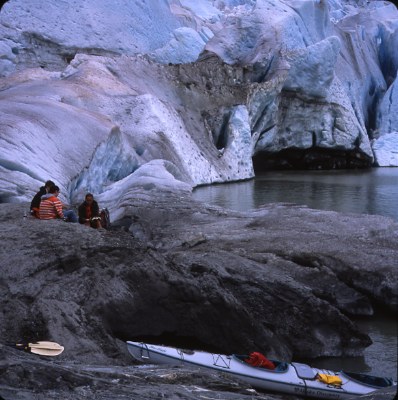
In this case, this group arrived in a pair of kayaks and settled in for lunch before doing their exploring. The “rock” they are on is actually a gravel-covered block of ice. The ice will melt over the next couple of months, leaving only a pile of sand and gravel. The fall rains and winter snow will probably wash the remaining sand down into the lake by spring.

The area of darkened ice on the face of the glacier is an area where the under-ice river flows out into the lake. The in-rushing water is leaving ripples in the otherwise still lake.
Submission 2014

I wanted to dedicate my submission this year to David Lee, who was a great master of medium format 3d and who I was lucky enough to meet.  His work has been an inspiration to me.

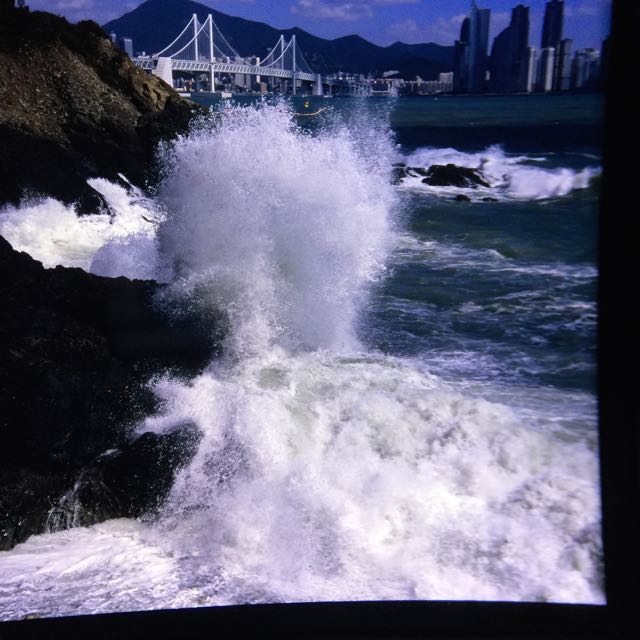
  1. Busan Igidae park, this was a beautiful park, this picture was taken on a windy day with the waves crashing in the foreground, and the Busan skyline, and bridge in the background. This was shot with the tl120 at f/11 1/250.
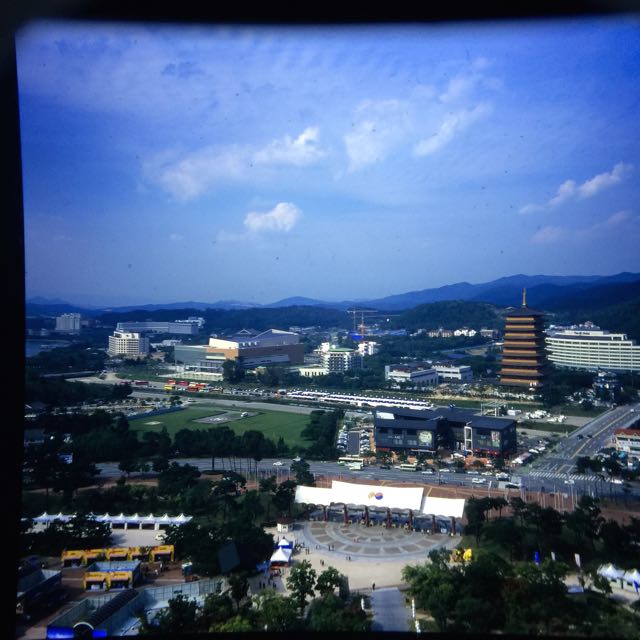
  2. Gyeogju, this is a hyperstereo with 50 foot separation Fuji gf670w fuji velvia.
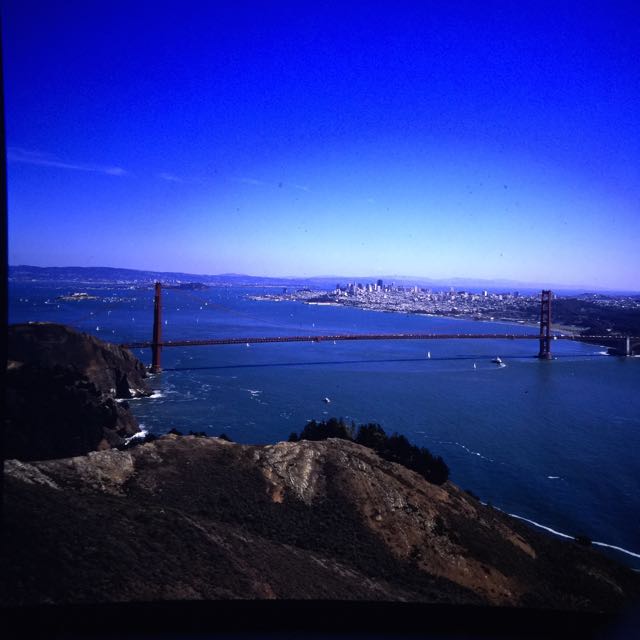
  3. San Francisco. I took this picture in San Francisco, please excuse, the ship motion artifacts between the two shots. Fuji gf670w 60 foot separation.  David Lee met me and drove me up to the viewpoint for this shot.
  4. Gyeongju temple:  This is a wooden bell in the temple on one of the excursions of ISU Korea 2015.

Thank you for allowing me to share my work.  I have enjoyed yours on this round

Nik Sekhar

Do Not Talk To Prisoners Through Bars!

burnet-barsaTaken in Burnet, Texas in 2014. This historic jail was built in 1884 of hand-hewn rock. It has an apartment for the sheriff who is also the jailer. On the second floor the county library was founded. The former jail is still being used by one of the county departments. The city of Burnet is nestled in the heart of the Texas Hill Country surrounded by rolling hills, lakes, beautiful geologic formations and historical sites. The historic square features buildings from as early as the 1880’s and offers a variety of unique shops and eateries. Drive in or take the Hill Country Flyer Historic Train (which is what we did) from Cedar Park, located on the edge of Austin. Watch the Burnet Gunfighter’s fight it out at the Old West Town on Saturday and Sunday. Taken with the TL120, available light handheld.


On Spaulding Meadow

The Spaulding Meadows are popular all year round. These are not meadows with cultivated hay fields. These are meadows in the second sense of the word, being areas of grass and flowers near the treeline. In the winter, they are very popular ski destinations, but the snowfall was so scant this year that there was virtually no skiing at all. They will often have snow in them until May, but by February 2015, the snow was gone. The images in this set are from a pair of trips I made to try to capture the combination of snow-free meadows and low-angle light.

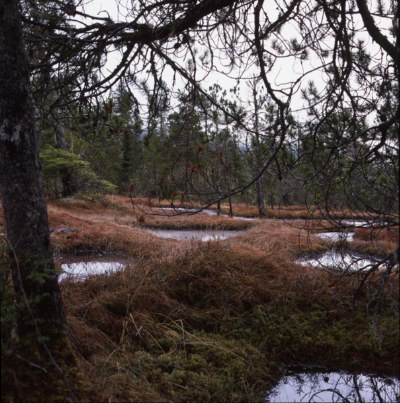
Scan000118Spaulding Ponds

The ponds and pools in the meadows were still solid enough to walk across, so it made for very easy access to all corners of this space. I nestled in under a couple of trees to try to capture the frosty glint on the branch tips. I provided a little bit of fill-flash in an attempt to brighten the gloom under the trees.

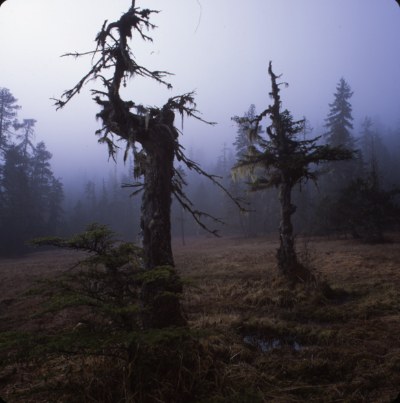
Scan000119Two Towers

Despite the level of the clouds, I think you can gauge the height of the sun. This was about noon, so you can see that the sun doesn’t get very high in Juneau in the winter. I think this image effectively contains infinity without containing a horizon. This is a very common condition in Southeast Alaska. The weather is very close and we are often hiking in the clouds at less than 1,000 of elevation. This image was made at about 800‘ with my TL120-55.

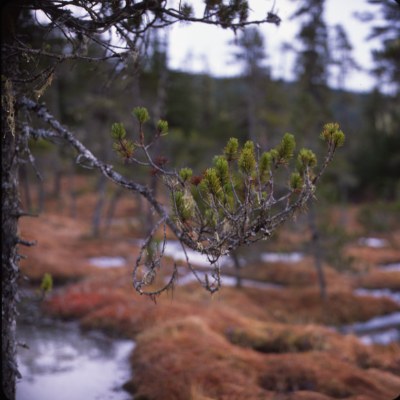
Scan000117Spaulding Close Up

While enjoying a cup of tea and taking in my surroundings, I found myself staring at a tree. My attention was drawn to a low-lone branch. And further drawn to the tufts of needles on a twig on that branch. And here it is. I would have liked to close in on a single tuft, but the TL120-1 can’t focus closely enough.

Impermanence

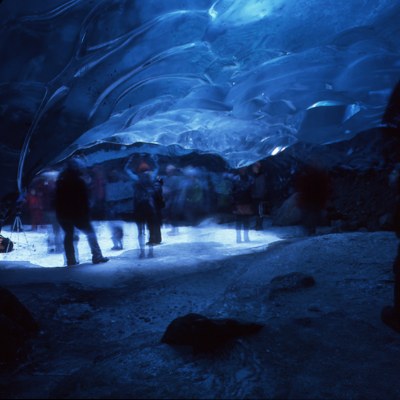
Scan000120Glaciers are slow. In idiomatic English, to move at a “glacial pace” is to move so slowly that a casual observer will not notice the movement at all. Yet over the years I’ve been making images featuring glacial ice, the rate of observable change is phenomenally fast. Even as I compose and capture an image, the ice is melting and the image is disappearing. The majestic, glowing cavern of today is the rotted, open-top canyon of the next week. It is dry open rock the week after that.

The folks at Extreme Ice Survey make time-lapse images of melting ice around the world. Two of their cameras are trained on “my” glacier, the Mendenhall, and their one-minute video covers seven years of activity. Time-lapse video is an excellent medium to convey the enormous change which takes place at a “glacial pace”. I don’t have an MF3D time-lapse video. I create still images. I offer you only a single still, and ask, “How do we identify the ghosts?”

Today, fourteen months after that image was made, those ghostly people still walk the planet. The blue palace at which they marveled melted off into the ocean long ago.

[Edited July 8, 2015 to add]

I visited the ice this week and am saddened by what I found. Because of the continued ice-recession, the walk is much longer and harder than it was a few years ago, and the destination is a pathetic shadow of its former self.  This may be the final image of my ice series.

From our guest, Matt Neima

Killarney Park

Before I forget, thanks to Steven Lederman for scanning these pictures for me! I think this was Delta 100 and processed by DR5.

This picture was taken on the chikanishing trail. Spoiler for me is the right image has a reflection or something that once you see it (sorry!) it becomes very distracting.

I wonder if it’s possible to touch up the emulsion to fix this….

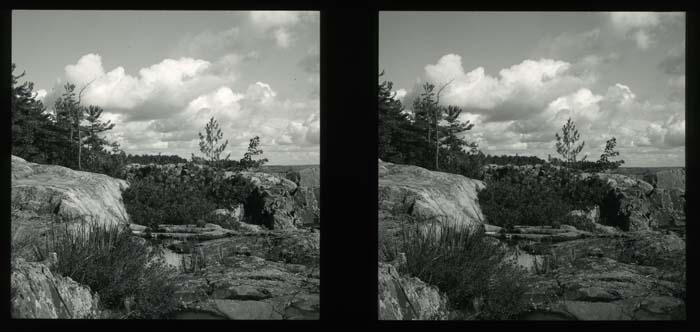
Rondeau Park

Talk about harsh lighting! I think this went around in the IMF3D folio. Some people liked it, some people really didn’t like it. This was taken with my Spud a long long time ago.

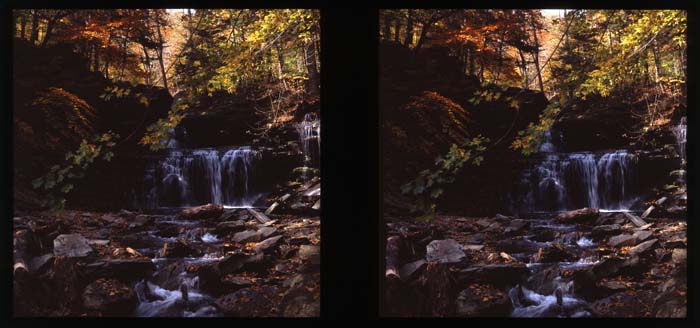
Ricketts Glen

Taken with the TL-120 in Pennsylvania on a camping trip with James Mutch. There are a lot of waterfalls in a small area here. At one waterfall J and I watched a pro photographer taking a classic fall colour waterfall shot. His assistant held a maple branch with red leaves in front of the camera while he took pictures.

Whistler

Taken with a TL-120 on the same trip to Vancouver a few years back. At that time I posted a picture of my nephew on his roller skates. I’m hoping this is a new image to this folio.

SILL LIFE

SLederman-SILL-LIFEThe textures of the various elements on this empty store front caught my eye while I was exploring Toronto’s Junction district earlier this month.  A guy came out of the apartment adjacent to the store and said; “what are you shooting? Cityscapes? This is my store…I guess I should paint it, huh?”  I looked up from my crouched position and said; “no! Not on my account!”  Maybe I’ll go back and shoot a couple of rolls of black ‘n’ white film before the owner decides to turn this derelict store into apartments.

This image was captured with a stock TL-120-1, on Velvia 100 shot at 200 and then home-push-processed in my basement.  The Velvia 100 was actually 22o format – I’ve worked out a winding sequence for the TL-120 that allows me to use 220 film in it as long as the little aluminum sliding door stays closed over the red window.  When I started using 220 film in my TL-120-1 I forgot about the aluminum sliding door and had an entire roll come out with transparent red balls embedded in the images.  I gave the useable ones titles with the word “Mars” in it, i.e. “Mars Needs Gas”.  Each image on the roll looked like it was being invaded by the planet Mars.

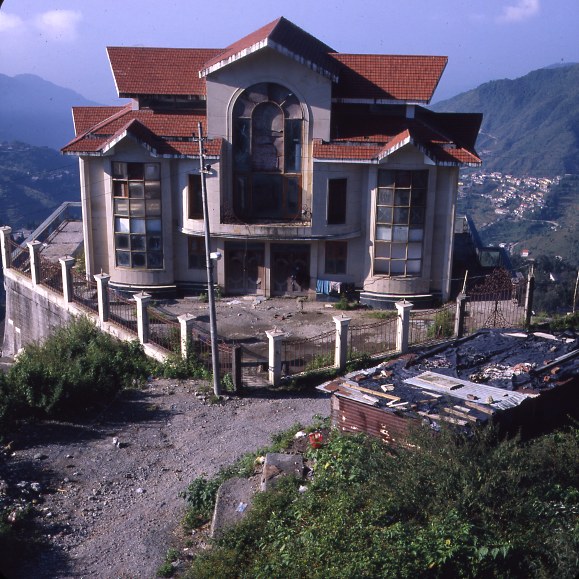
Abandoned House, Mussoorie India

Scan000110This was the view from the Plaza hotel in Mussoorie India.   It must have been a gorgeous residence at some point.  You can see that someone is living there, or at least hanging some laundry up to dry.   Mussoorie is in Northern India at the foothills of the Himilayas.

Photographed with a TL-120 using Provia 100F pushed one stop.   I used a pod-support on a deck railing.   I think it was 1/125 @f16.

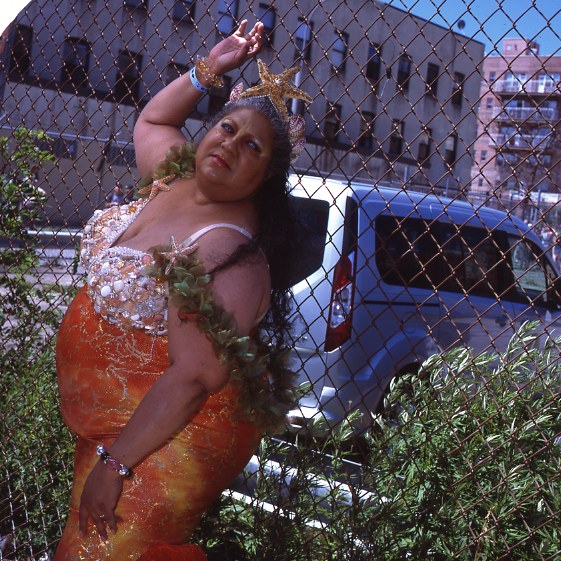
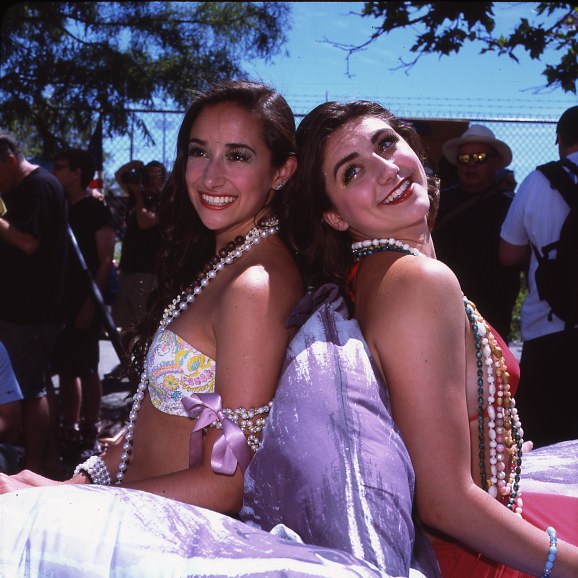
“Mermaid Parade – Twin Pillows”

Scan000111Photographed with a TL-120 using Provia 100F pushed one stop with a Vivitar 285H with a diffusor for fill-flash.  I believe it was f16 @ 1/125.   The TL-120 seems to do fine with flash sync at 1/125 even though 3D World only claimed 1/30.

It was bright sunny day for the 2014 Mermaid Parade, fill-flash saved lots of my shots from excessive shadow detail.

For me fill-flash is like that commercial for hot-sauce:   “I put that $#*& on everything!”

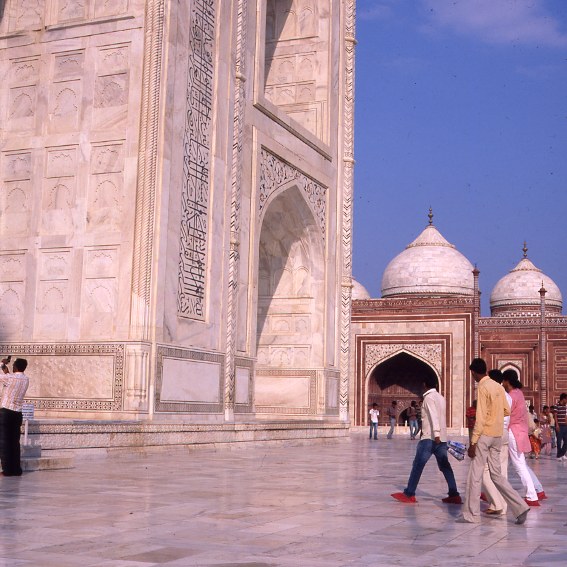
Taj Mahal Close

Scan000109The Taj Mahal is often seen just in the classic full view, but there’s quite a lot to look at when you get closer in.   MF3D is really the only medium that can convey the richness of all the marble inlays and carving.

This was photographed with a TL-120 using Provia 100F pushed one stop.  I believe it was 1/250 @f16.  No tripods are allowed at the Taj unless major fees are paid, so this was shot with the camera hanging around my neck using a Hasselblad waist level finder and a cable release.   October 2010.

The TL-120 attracted a lot of attention in India, at times I was mobbed with people wondering what it was.

Against The Light

Against The Light

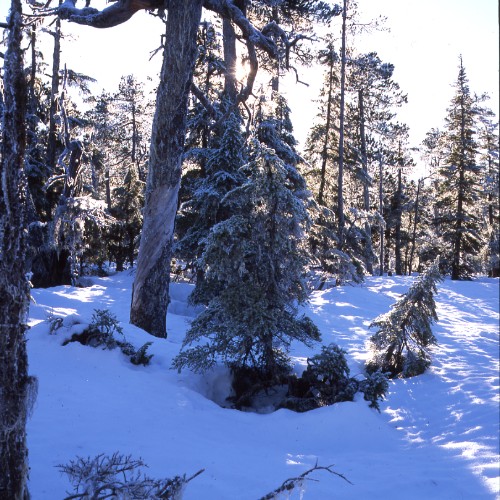
Looking over my earlier efforts at winter landscapes, I decided that my lighting decisions were too conservative and would never capture the feel of a winter snowscape. In February of 2014, I tried to change that by using more aggressive sun angles and shooting into the light. I didn’t want to go full contre jour because so much of what I find engaging are the textures of the surfaces, and MF3D is superb at capturing textures.

Here, I tried to position the camera so both lenses were shaded by the distant trunk, and positioned a flash on the left. I then waited while the earth turned, and tripped the shutter as the shadow-line reached the camera.

The result is the the best representation I’ve been able to make of a Juneau winter day. The sky isn’t blown out, but is a featureless sea with a floating sun. The trees are more than silhouettes and able to contribute to the story.