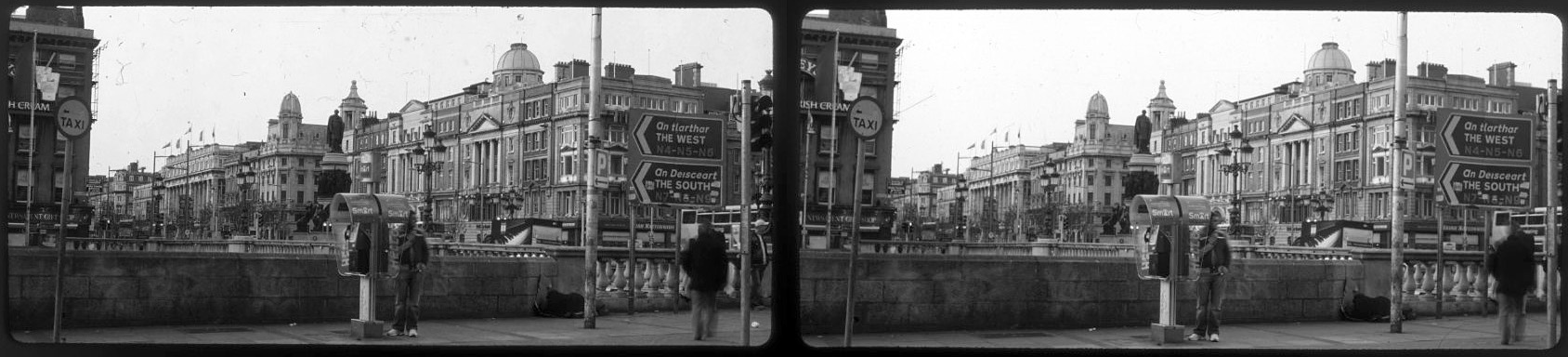
I think this was in 2006. Photographed with twin Yashica-Mat 124s using Ilford Pan F processed at DR5.
I think this was in 2006. Photographed with twin Yashica-Mat 124s using Ilford Pan F processed at DR5.
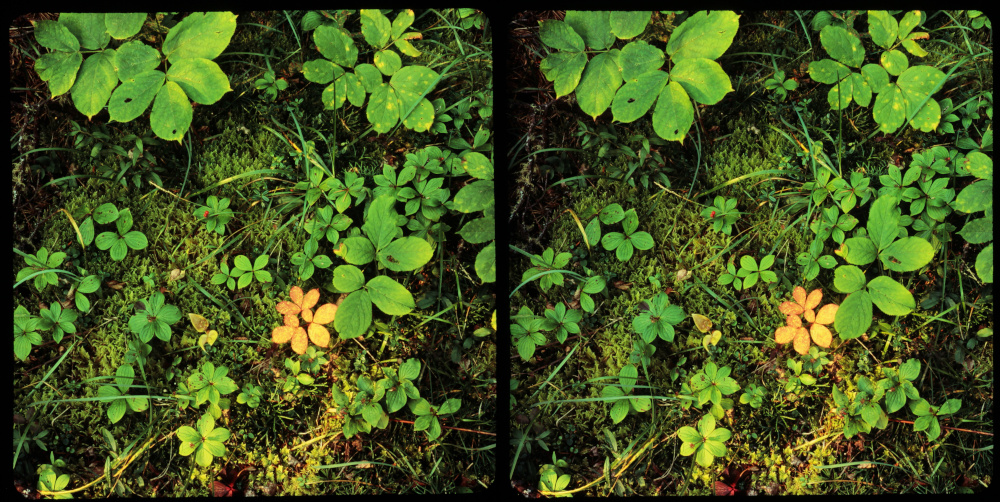
Boreal Floor. Velvia 100, TL120.
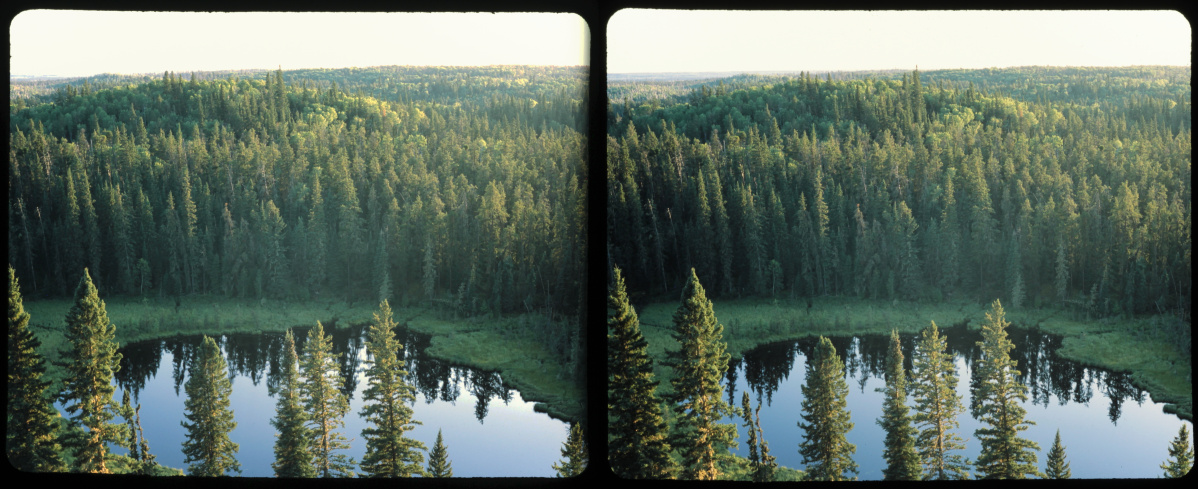
From the Esker. Provia 100F, TL120 cha-cha
Two of my contributions to this loop, Boreal Floor and From the Esker were taken at Narrow Hills Provincial Park in northern Saskatchewan. The latter was taken from an esker (ridge of earth pushed up by the last glacier) that runs along the park. It provides a nice vantage point looking over the boreal forest and numerous small lakes. Here I attempted a hyper stereo with my TL-120 by covering one lens and moving the tripod about a metre between exposures. There was a significant amount of smoke from wildfires in the area when I last visited the park, so unfortunately the sky was washed out and featureless in all of my slides.
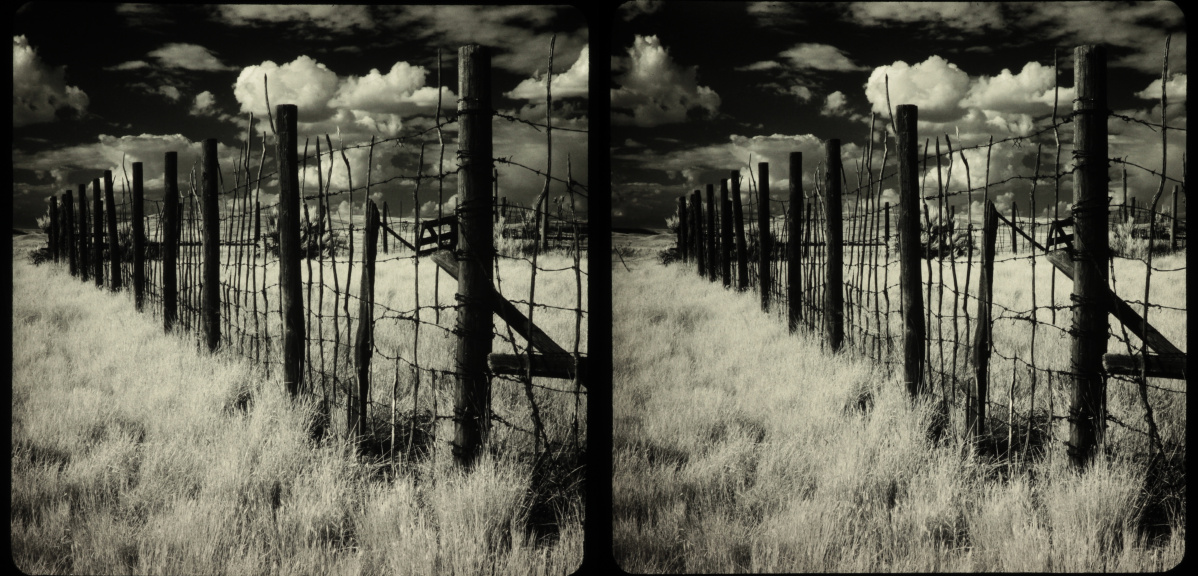
Crested Wheat Corral. Superpan 200, reversal processed in D67. TL-120 with Hoya R72 filters.
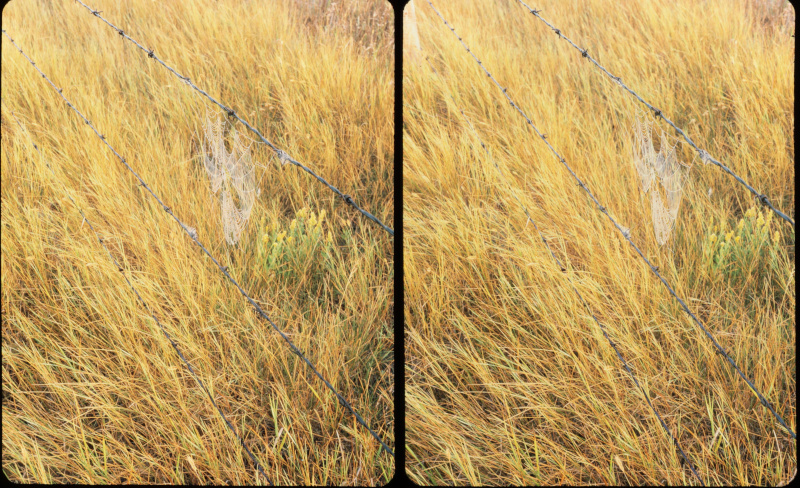
Web. Provia 100F, TL120.
The other two images were taken at Grasslands National Park very near the Saskatchewan-Montana border. Crested Wheat Corral is in the west block of the park where the remains of several small ranches can be found. The area is very arid, and ranchers tried tilling the soil to improve the pasture, but this turned out to be a poor practice. They introduced Crested Wheatgrass (native to Russia) to the disturbed soil with limited success, but it did prevent further erosion. Large portions of the park still contains undisturbed virgin prairie, which is probably one of the most disturbed landscape types on the globe due to its agricultural usefulness. It’s somewhat off-topic for MF3D, but I made a surprisingly successful silver gelatin print from this slide by making an internegative. I think that this approach yields much better results than a direct reversal print.

Beechy Sand Castle
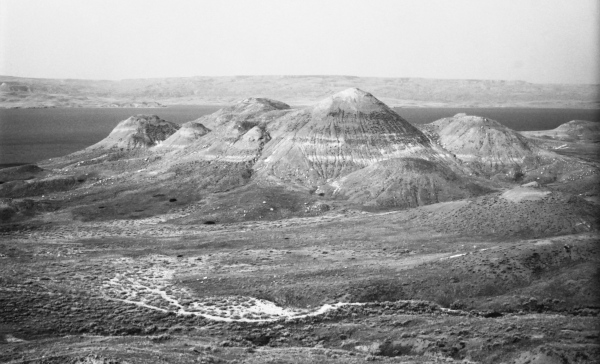
Hyper Hills
The first two images I have submitted were taken last summer at a unique location here in Saskatchewan called the Beechy Sand Castle and Sunken Hill. There are a couple of quarter sections of ranch land near the inlet of Lake Diefenbaker on the south Saskatchewan river that are home to some interesting land formations. It’s on private land, but the owner is gracious enough to allow visitors to come and hike around the area. Legend has it that an underground gas pocket collapsed, causing the land to give way. One day, the rancher went to check his cattle, and the tracks left by his truck a few days prior led right into the crater of the Sunken Hill!
The location is only accessible during dry conditions, since you have to drive through a field to get there. It was very hot the day I went and also quite smoky from forest fires out west in British Columbia. After walking around a bit and seeing the lay of the land, I knew I wanted to try out some hypers, but I had neither a laser rangefinder, nor Mike Davis’ stereobase calculator. I tried some anyway, but as you can see by my slipshod cutting to expand a panoramic mount, I didn’t get it quite right. Most of the hypers I took had very distracting retinal rivalry in the water, but this one didn’t seem quite as off-putting for whatever reason. This summer I have a goal to get a working system for hypers using two Agfa Isolettes.
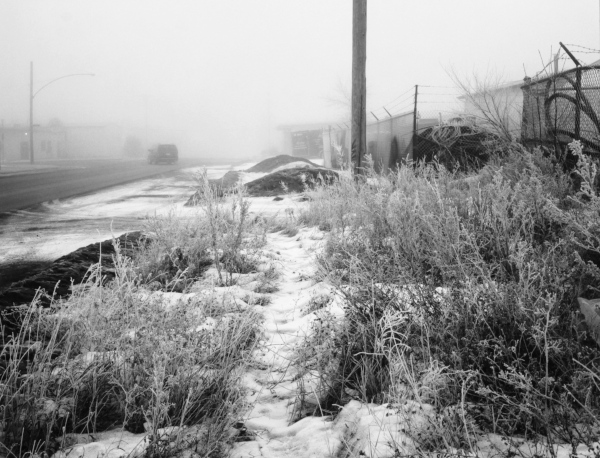
Smell the Roses
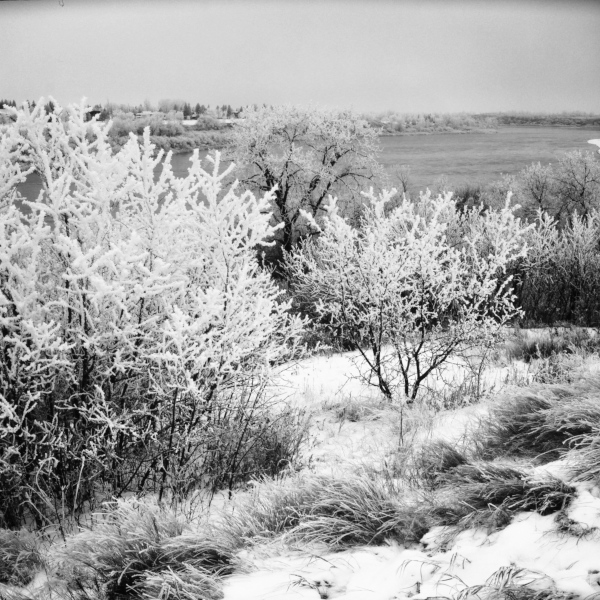
Frosting
The other two slides are from my city, Saskatoon, on one of the few days of the year that we get hoarfrost. It’s always so beautiful and it’s one of my favourite things to photograph in MF3D. I titled the one slide “Smell the Roses”, because the frost can make even a pile of overgrown weeds in an industrial district look pretty, and it seems like many people don’t stop to take notice.
Now that I’ve got a workable B&W reversal process, I’m more motivated to shoot black and white. Hope you enjoy!
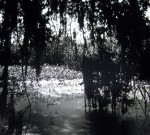 This image was made several years ago at Brazos Bend State Park (Texas) where my alligator shots all come from. I think I used a sputnik and most likely used tech pan. I have no idea what settings were used on the camera.