Summer in Boise

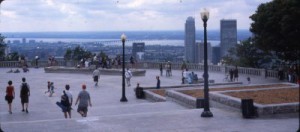
From the winter of 2008, we move to the summer of 2008.  That summer, the NSA convention was in Boise. I went and took my TL120-1 along. Aside from the good time, good conversations, and good theater, there was great weather. I don’t know what the folks in Boise thought of it, but it was warm and dry (certainly not Juneau weather) and it appealed.

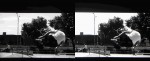
These were the two better street-shots of the two rolls I burned in Boise. Both are from a hand-held TL120-1.

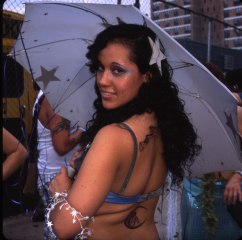
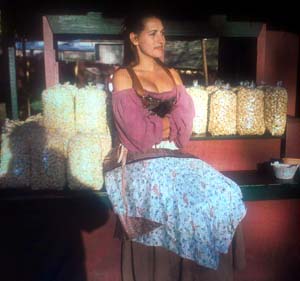
Coney Island Mermaid with Umbrella

Scan000084Coney Island Mermaid with Umbrella- Jim Harp

Shot with a TL-120 and a Vivitar 285H fill-flash with plastic diffusor.   The fill flash is an important element in this shot, without it her face would have mostly been in shadow.     The Coney Island Mermaid Parade happens on the first Saturday after the Summer Solstice every year and is a wonderful opportunity to get interesting people shots.   There are plenty of photographers with interesting rigs who attend, but the TL-120 never fails to attract attention.

Inaugural Offerings

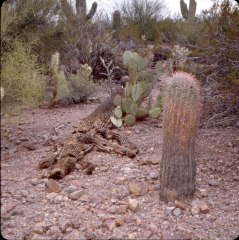
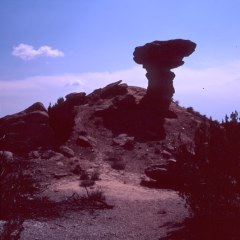
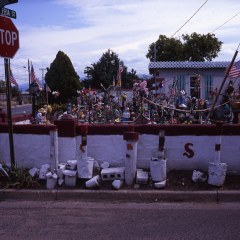
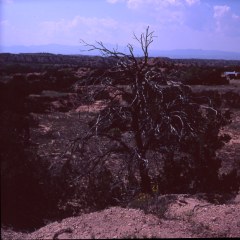
Geoffrey Waldo is our newest member in 2013. As you may be able to discern from his images, New Mexico is home.

I’ll go out on a limb and suggest these images were created with a TL120-1.

–John Thurston

Submission 3

This is my 3rd submission to the folio.   It is an honor and privilege to share my slides and view the wonderful work of the other participants. It was fun to meet some of you at this year’s NSA and I look forward to meeting you again soon.


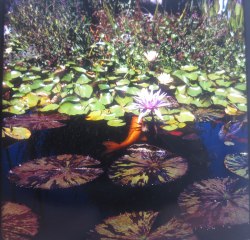
Koi: This was shot at the Mission  San Juan Capsitrano during the NSA field trip.  All are shot with TL120,  This was Velvia 100 at f 16, 1/125

Alice and Mom:  This is my wife and her mother Efke 25, sb28 flash at auto f8.

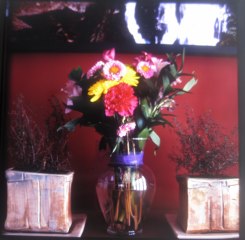
Flower arrangement: f22 1s velvia

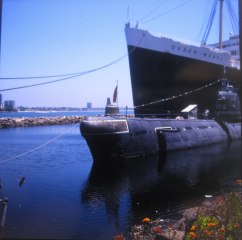
Hummingbird and Quen Mary:  This was shot during the NSA trip.  I was lucky enough to catch this Hummingbird fly into the scene.   I love the contrast in scale.  Velvia f22 1/60


All in one place

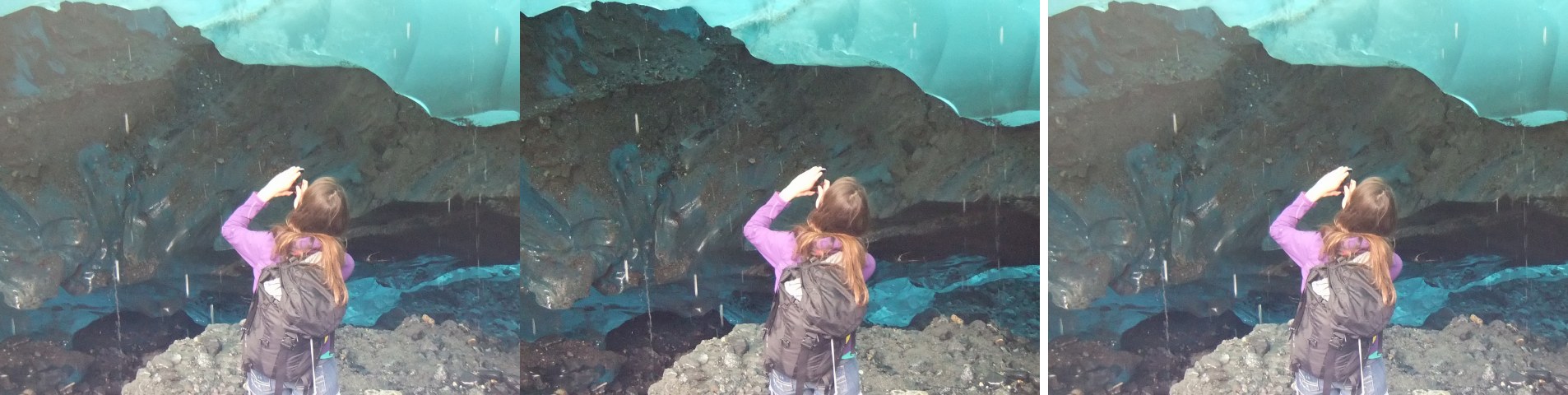
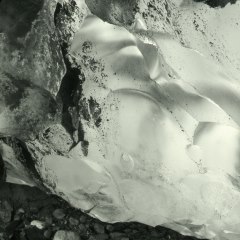
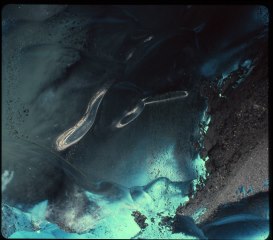
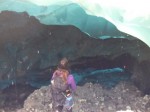
Today, we’re going back to the ice but we’re not going to move much once we get there. All of the images here were made within 50-feet of each other. The subject is a fairly stable ice cave. I say fairly because it was created by an active creek so there is water flowing into it. The ground is mud, silt, ice, and gravel and is sliding into the cave and under the glacier. The ceiling is made of ice and is full of mud, silt, and gravel and is falling onto the floor. While I was working, some nice ladies stopped in to visit the cave. I used my Fuji to get a set-the-scene snapshot.

Deep V
In The Groove

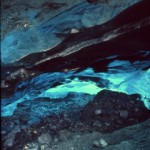
Just inside the cave, the layers of the ice are obvious. The younger ice is above, the older ice is denser and is funneling the melt water out to the edge. The running water has carved a Deep V in the ancient ice. The mud and sand is trapped between the layers of ice and is being washed down and dropped on the floor. When working under the ice, the water running down your back is really mud (of various dilutions).

A little to the right, and closer to the ice, In the Groove better shows the layers in the ice and the sand and silt trapped between them. We can also see melt water pouring in to join the creek farther inside the cave.

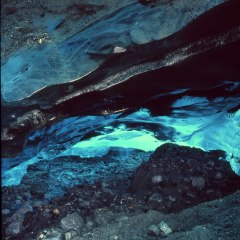
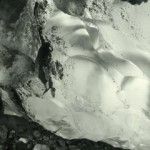
Farther in the cave but looking a little up, we can see Below the Surface(BW). There is sand and silt embedded inside the ice, and the layers are evident from the back just as well as the front. (Now’s a good time to wish we had carried a helmet with us. The roof is melting, remember?) Finally, we can move a little farther in and get in close. That sand in there has been trapped in the ice for a couple hundred years. It’s just itching to get out so it can slide down into my camera.

Below the Surface (BW)

Below the Surface

All images were created with a tripod mounted TL120-1. I don’t record exposure times but the fastest time used was 1 second. They were shot on Provia 100F, Provia 400X, or Ilford HP5.
Nugget Falls Revisited

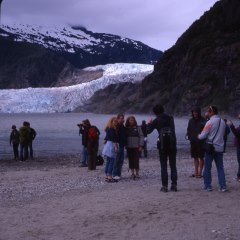
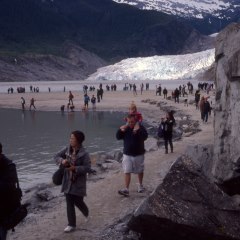
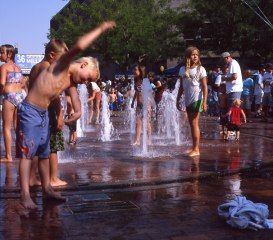
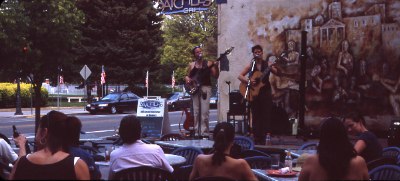
After visiting Nugget Falls, and seeing the other visitors on that cold November day, I started thinking about the presence and absence of the camera-toting tourists. With that idea, I returned to Nugget falls in the height of the tourist season to try to capture some Alaskan Wildlife.

I approached the project in two ways. In the first, I went among the tourists. I openly carried my camera and snapped pictures as I saw fit. I didn’t try to be obscure or secretive, and I my TL120-1 was certainly not discrete. I was able to capture some characteristic tourist activities. These included primping for the camera, chimping the group shot on the camera, bickering over the camera, and arguing over the correct way to operate the camera. You get the idea. I fit right in.

In the second case, I set up a blind on a common game trail. I tried to get my 20′ air-release to work, but it failed me and I was forced to work with a 10″ cable release.  I aimed the camera, set its exposure, and settled back onto a boulder. By kicking back on the rock with my arms crossed, I was able to hold the cable release in my fingers and trip it when I felt the scene before me was set. Too bad the TL120 lacks a motor advance or I wouldn’t have needed to get up and break my repose. One person called me out on the rig he spotted in the rocks and correctly identified the device as a “big stereo camera”.