Ian Andvaag A35 submission

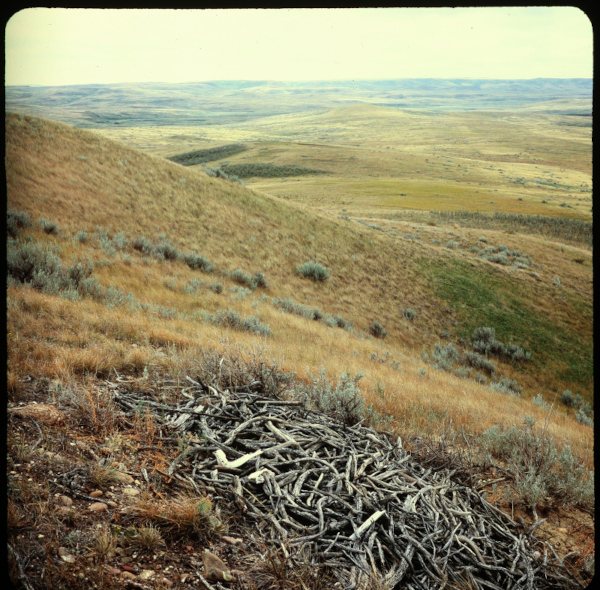
Ferruginous Hawk Nest

I found this nest on a hike called “The Valley of 1000 Devils” in the East Block of Grasslands National Park. Hiking in the back-country is nice as you cant point your camera in nearly any direction without including any sign of human development. The English transliteration of the Latin scientific name for this bird is “Royal Buzzard” — surely Saskatchewan’s most impressive grassland bird.  Here it has used some bones to construct its nest. I wish I had a half stop less exposure here.
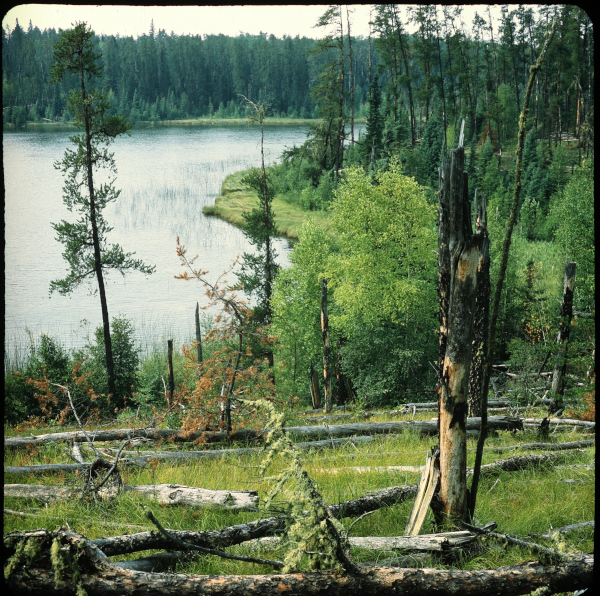
 

Narrow Hills Esker View

This one is a bit sad for me. I took this shot in Narrow Hills Provincial Park. It was a bit smoky the year I took this photo from forest fires further north — you can see the lack of contrast in the distance. (You can also see a blurry log in the foreground due to insufficient DOF, but try not to focus on that too much!) Well, during the summer of 2025, a large fraction of the park was burned in a forest fire, including this area. I guess it might be kinda interesting to go back and take some photographs after the fire.
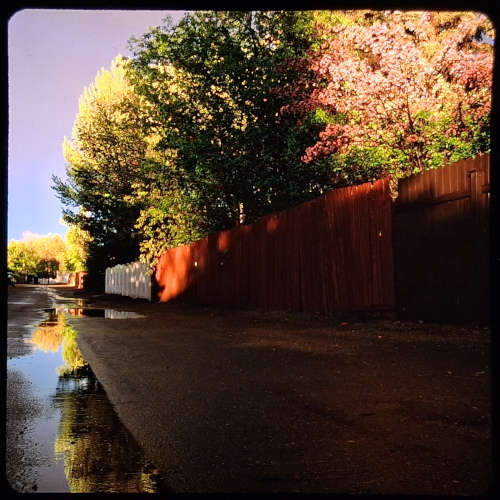
 

Alley After Spring Storm
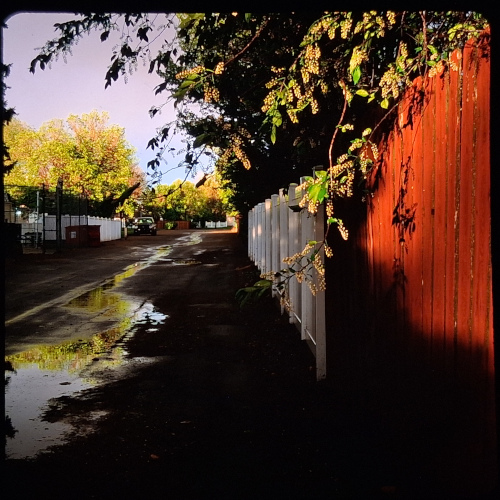
Back Alley Fence After Storm

Sorry for the two similar views, but I’d like to get your feedback. After a spring storm, the clouds cleared right around sunset and there was some really wild light. I was totally overcome by the atmosphere that I found myself immersed in. There were lots of wonderful wet reflective surfaces and great textures highlighted by the low angle of the sun peeking out from the clouds. I knew I only had a few minutes before the sun set, but I didn’t know where to point my camera. I was just around my house in a suburban environment and the neighborhood is rather photographically uninspiring ). I knew I had to try to shoot something in 3D, so I grabbed my TL-120 and ventured down the alley. I’m curious if you’ve ever found yourself in a similar situation. How would you approach shooting this situation? Do you see any potential compositions in these two slides that I overlooked?


Cheers and thanks for the many wonderful images this round!
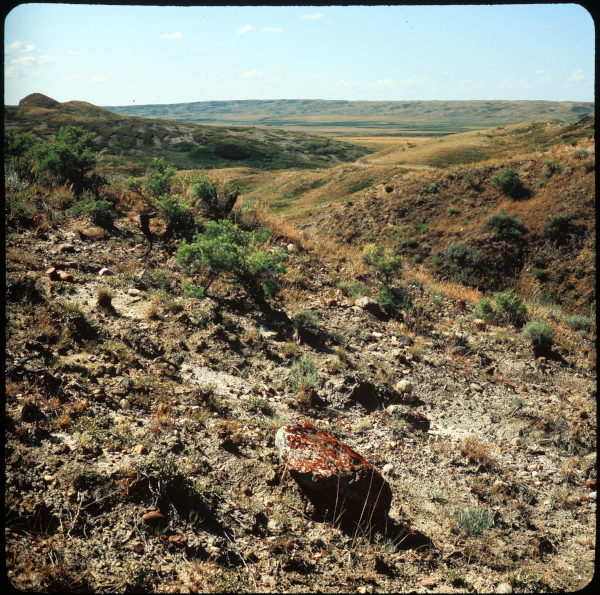
Ian Andvaag D27 submission

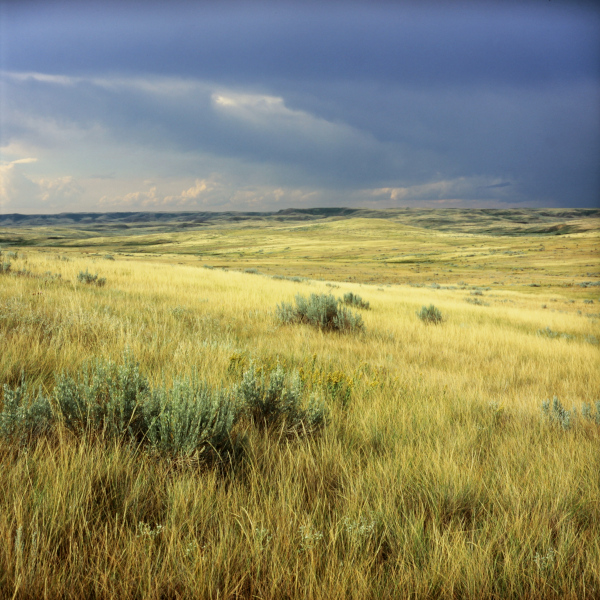
70-Mile Butte

Taken on a hike on the west side of Grasslands National Park in southern Saskatchewan. The trail is only a couple miles long, and the trailhead is about 15 miles from the US border, so I’m not sure what the name refers to. The sun beats down hard and there is very little rain.

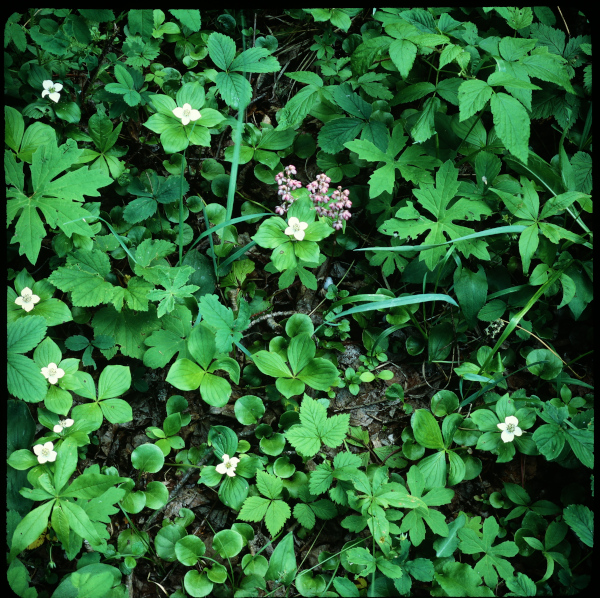
Boreal Floor

A close-up from Prince Albert National Park in central Saskatchewan. I blew the whites a bit, and a blade of grass is blowing in the wind. MF3D is tough to get right!

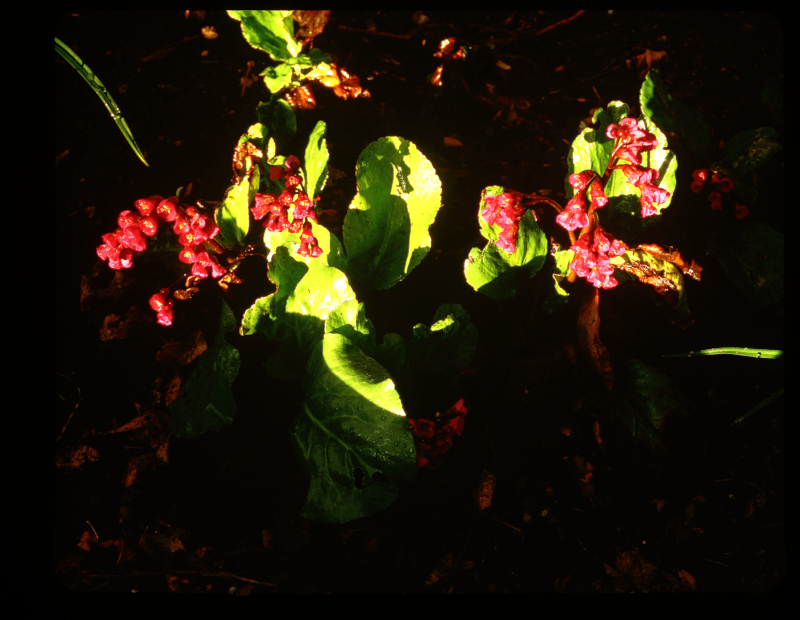
Bergenia in Wild Light

I was unsure about submitting this image (barely made the shortlist), but my test audience liked it, so I thought I’d see what the pros say. This was taken after a spring rainstorm. The clouds cleared away right before sunset and I had 15 minutes of absolutely crazy light. I couldn’t travel too far since time was short, I took a couple shots in the alleyway and this bedding plant. The dynamic range far exceeded what Velvia offers. This would have been clear candidate for an M-chrome.

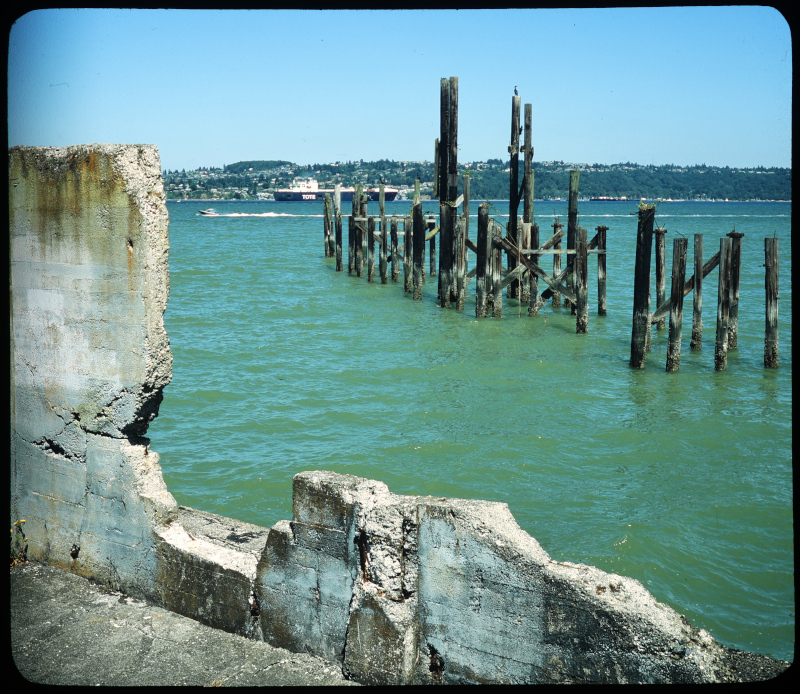
Dickman Mill Ruins

These are some remains from a sawmill constructed in the late 1800s. Taken in Tacoma, WA during 3D-Con 2022. After mounting this slide, I did a google search to remind myself of the name of this location, and apparently the creosote treated pilings have now been removed.

Ian Andvaag d22 submission

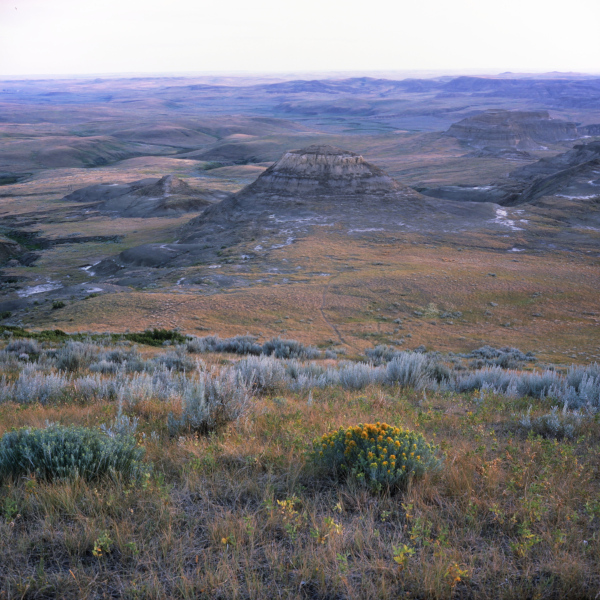
My first two images were taken in the East Block of Grasslands National Park in my home province of Saskatchewan, just North of the US border. It’s one of my favourite parks to visit. Since there are almost no trees (just a few cottonwoods down by the river), you can see a really long way. Consequently, you’re likely to see a lot of wildlife if you visit the park: pronghorn antelope, white-tailed deer, prairie dogs, badgers, ferruginous hawks and all manner of songbirds. Perhaps the most interesting is the burrowing owl, which makes its home in abandoned prairie dog tunnels. There’s also a herd of bison that they reintroduced to the park as a range land management strategy: the bison graze heavily on certain species of grasses, helping to keep a well-balanced prairie.

d22-1: Great Plains

d22-2: Badland Butte

There are no well-defined trails, so you are free to roam around how you like. There are not many visitors to the park, so you can really appreciate the surroundings and get lost in your own thoughts. Even though you can see quite far, there’s little worry about someone walking into the scene you’re photographing. A lot of people, particularly from rural areas of the province find it strange to “go camping in a pasture”, but it’s really a wonderful place to unplug from fast-paced life and just walk around and think about things. The (mostly) native vegetation and abundance of wildlife is also considerably different to a cultivated pasture. It’s hard to imagine that the entire lower half of this province was filled with native grasslands like these, before 90% of it was cultivated.

There was a pretty big storm the one day I went hiking, and as the lightning was getting closer, I realized how little cover there really was around me on the bald prairie. I rushed down to the bottom of a hill and crouched down to make myself small. There were some tremendously loud and bright lightning strikes nearby which were pretty scary. I felt pretty powerless. The Great Plains image was taken about half an hour later, after the storm had started to move on.

For Badland Butte, I wish I would have had a stereo rig that allowed me to increase the stereo base. I tried some cha-chas with the TL-120, but the angle of the shadows actually changed appreciably in between the exposures, leading to some somewhat unpleasant retinal rivalry. I’m fixing up a couple of Agfa Isolettes; hopefully I’ll have them ready to go for this summer. I’d love to hear anybody’s suggestions for a good slide bar. I found out that Jasper Engineering no longer makes their slide bars.

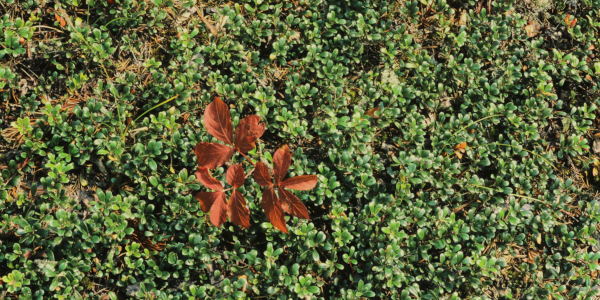
d22-3: Wild Sarsaparilla in Lingonberry

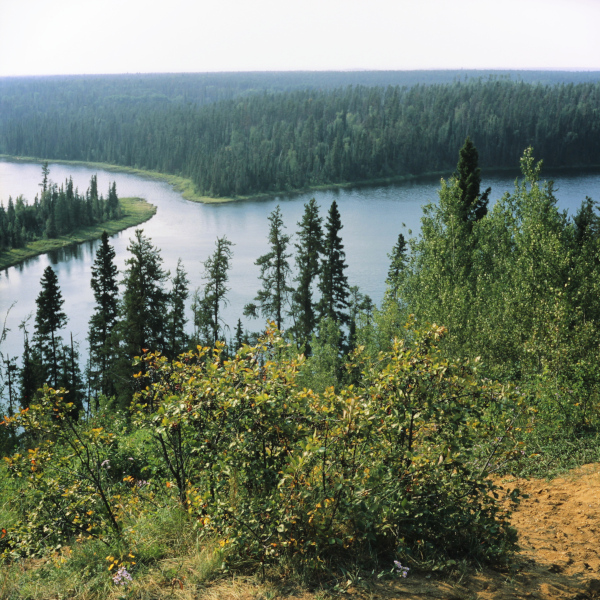
d22-4: Chokecherries

The last two images were taken in Narrow Hills Provincial Park, this time further North, but still in my home province of Saskatchewan. I really liked the subsurface scattering in the red Sarsaparilla leaves, and the background texture of small green Lingonberry leaves made for a nice detail shot. The Chokecherries image is from the top of an esker left when the glacier retreated. A trail runs along the top of the esker which overlooks several small lakes below. The lakes pictured here are called the Grace Lakes. I visited during the end of summer, so it got pretty cool at night.

Hope you enjoy! Thanks for all your submissions, I really had a great time viewing all the wonderful slides this time around!

Ian Andvaag

Ian Andvaag A30 submission

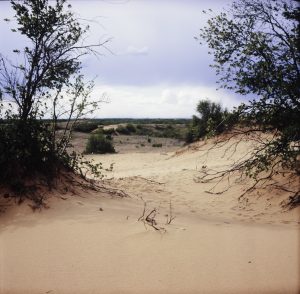
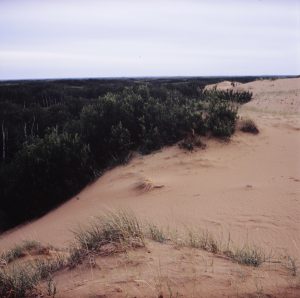
Encroaching Dunes and Storm Brewing were taken during the four separate times I visited Douglas Provincial Park this summer. It is a nice ~4km walk out to the dunes, through scrubby aspen parkland full of scraggly junipers and cacti eking out an existence off the dry, nutrient deficient soil. Unfortunately our provincial government has thoroughly defunded our provincial parks, so the nature centre at the trail head has been permanently closed and has fallen into disrepair. So, I don’t know much about this unique ecozone. At least the trail markers remain mostly in tact, so it is still easy to find the dunes, although the trails are not used very frequently. During my visits I only ever encountered maybe 3 groups of people.
The first time I went I discovered rather dramatically at the end of my 5 hour hike that my TL-120 had not been working properly. It was getting dark and I decided to do a couple of longer exposures. I set up the camera to 1 sec and took the shot … the shutter did clicked open and shut without any delay. Uh-oh. I had always thought that the camera had a mechanical shutter, so even if the battery was dead, it would still operate normally, except for the light meter. Earlier in the day I had been shooting at around 1/60, and didn’t notice that the shutter wasn’t staying open long enough. I think I developed 5 super underexposed rolls from that excursion. Lesson learned, I’ve now carefully reread John Thurston’s excellent page on battery options, and I always carry spares now, and I change the batteries periodically.
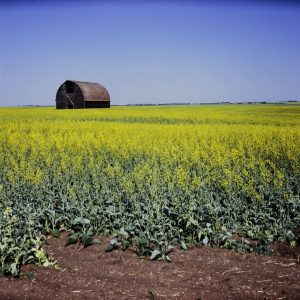
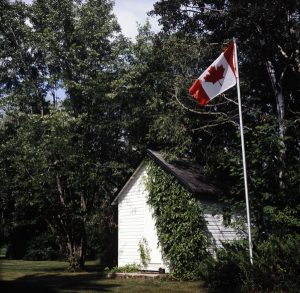
Canola Fields and Milkhouse were taken near the farmyard where my Dad grew up. I should have been there about 1 week earlier to get optimal colour in the canola flowers. I wish I would have had an opportunity to photograph the field in the early morning or late afternoon warm light, but it was cloudy. I think Milkhouse is a bit weaker than the other slides in my submission, but I really like the colours, so I decided to include it.
I’m really enjoying shooting with the TL-120, but I still take out my Sputnik in adverse weather conditions and when it is inconvenient to lug around the heavy TL-120. Sometime in the future I’d really like to try some hypers after seeing some amazing slides from the folios. I still struggle with exposure a bit, I’d say only about 80% of my shots come out properly exposed (provided my camera has functional batteries!) Was the TL-120’s internal light meter calibrated for colour negative film, because it seems to overexpose most scenes by a bit. I use my Gossen Luna Pro F primarily. Perhaps I should consider getting a spot meter.
I really enjoyed the folio again, thanks all for your lovely images!